top of page

bp UX Job Simulation
Mobile app for your electric vehicle needs


Participating in the bp UX job simulation through Forage gave me insightful experience into the role of a UX designer. This simulation offered hands-on tasks that mirrored real-world scenarios, allowing me to apply design principles, conduct user research, create wireframes, and iterate based on feedback.
Project Type
Duration
Deliverables
Tools
UX Job Simulation
Independent
Mobile App mockups
1 week
Figma
FigJam
PROJECT OVERVIEW
When moving to a new city or traveling, finding electric vehicle charging stations can be challenging without prior knowledge or connections. Users have to navigate various apps and websites, and even then, locating the nearest charging station was often cumbersome, especially in new territory. Keeping track of the vehicle's battery life and other essential information was equally tedious. Is there really no streamlined way to find charging stations and monitor battery life using location-based services?
Well..let's make this process easier!
User Goal:
Find a way to make it easier for users to navigate charging stations no matter their location
Organization Goal:
To build a worldwide digital platform for electric vehicle users, connecting them through seamless digital tools and real-world experiences.
KPI's & Success Metrics:
-
Daily & Monthly active users
-
# of charging stations located
-
Retention Rate
-
App performance & Uptime
The Research
Assessing Pain Points:
Before I begin the design process, I wanted to get an idea of what the goals for this application would be by targeting some pain points of the users. The pain points include:
-
Finding the closest charging station within a certain radius.
-
Not being able to know if they can reach the closest charging station.
-
Don't know if their vehicle is compatible with the chargers.
Opportunity areas for bp EV application:
Seamlessly integrate with GPS and map services to offer real-time navigation to the nearest charging stations.
Partner with vehicle manufacturers or integrate APIs that allow the app to access real-time data on battery health and performance.
Ensure the app provides real-time updates on charger availability and compatibility status, helping users plan their routes effectively.
Persona Development
Based on the research insights, I developed a primary persona demonstrating our target users, especially their goals and pain points.

Competitive Analysis
How do we match up in the market?
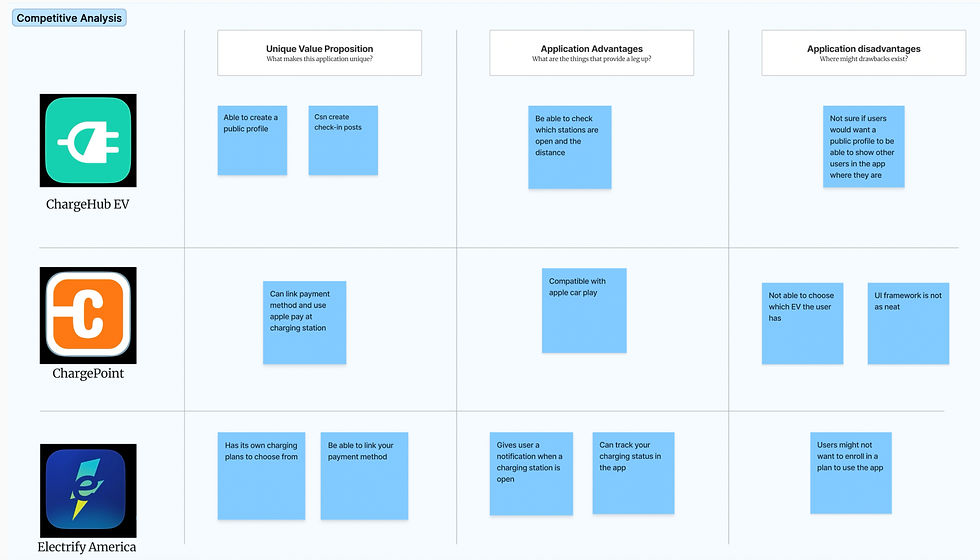
To better understand the market I completed a competitive analysis using FigJam on top mobile applications for electric vehicle charging stations.
The process revealed that the apps on the current market exist with features to help users find the closest charging stations but not show how much battery their vehicle has left to reach that station. This became one of our priorities while we continued our design process.
Lo-Fidelity Prototype
I then began the digital wireframing process on Figma making sure to include some key points and create a representation of what the bp application could look like.

The Design Process
Hi-Fidelity Prototype
The next task was to create a hi-fidelity prototype or what I like to call the beautification process in UX. Taking design considerations from the data we compiled I created a hi-fidelity prototype.

🚘 Real-Time Charging Station Availability
📌 Charging Station Details
🌎 Interactive Map
🔎 Filter and Search Options
✅ Vehicle Compatibility Checker

🔋 Current Vehicle Battery Percentage
🧳 Trip Details
⚠️ Estimated Range
🚗 Trip Summary
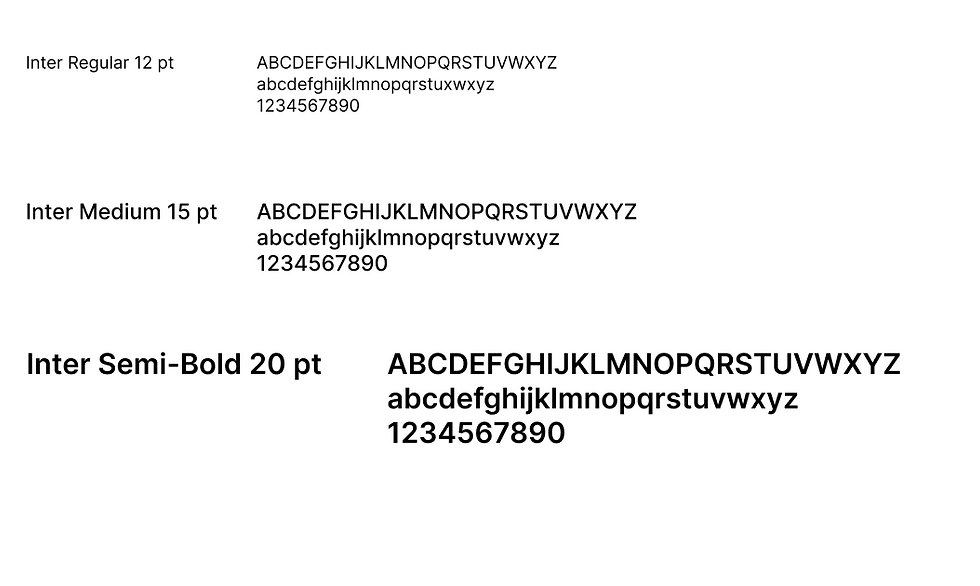
Visual Design
What I learned?
📖 The big takeaways? Well, people really appreciate knowing which charging stations are free in real-time. Also, they'd love features like planning a route with charging stops, getting the lowdown on each station, reading what other users think, and being able to pay without a fuss.
📖 The simulation made it super clear that we need a clean and easy-to-use interface that lets you check your vehicle's battery levels and trip details without breaking a sweat. All in all, this experience just goes to show how much user-focused design and a bit of trial and error can help us nail down what works best for EV charging.
#403F3F
#2E2E2E
#6F6E6E
#B9B9B9
#009B01
bottom of page